

Compsognathus longipes
Compsognathus for kids
Compsognathus was a very small Jurassic meat eater; fossils preserve bones of small lizards inside.
The essentials
What should you know about this dinosaur?
- Length: 0.7 m long
- Height: about 0.35 m tall
- Weight: about 3 kg
- Food: Meat eater
- Time: Jurassic
- Region: Europe
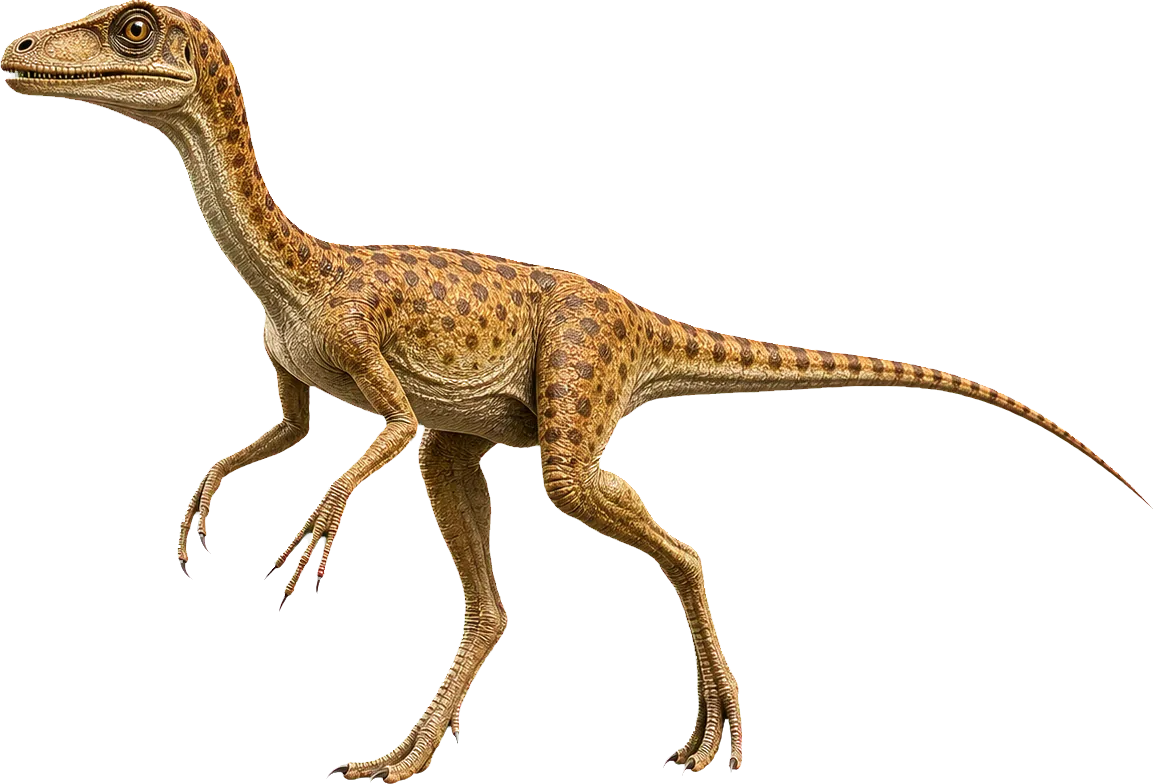
How large was Compsognathus
The height stays very low. Length comes from the slim body and long tail.
Compare in the toolLook a little closer
More about Compsognathus
Short chapters for curious children and grown-ups who want to read along.
Compsognathus
Compsognathus is small, but not boring-safe. This Jurassic dinosaur was about the length of a large bird with a tail and ran on two legs. It became famous from European fossils, especially fine limestone like the Solnhofen beds. The best detail sits in the belly area of one fossil: bones of a small lizard. That gives a direct clue that this mini hunter caught quick little animals.
Size
Compsognathus was about seventy centimeters long, with a lot of tail in that number. Next to big dinosaurs, it is tiny. The body was slim, the legs long, and the head light. That small size is the cool part: meat eaters did not all have to be giants. Some hunted in the mini-world between stones, plants, and little animals.
0.7 m longvery smalllong tail
Food
Compsognathus has a wonderfully direct food clue. In one fossil, bones of a small lizard lay in the belly area. That points straight to a real meal. It was not hunting giant plant eaters; it chased small, quick animals. For such a light dinosaur, fast legs, a narrow head, and alert eyes mattered more than enormous jaws.
meat eatersmall lizardsdirect food clue
Habitat
Compsognathus fossils come from Europe, from places with islands, lagoons, and fine lime mud. Stone like that can preserve tiny details. Archaeopteryx is known from that same famous rock world. So Compsognathus becomes part of a beautifully saved Jurassic scene: small bodies, delicate bones, clear traces in stone.
EuropeSolnhofen areaLate Jurassic
Protection
Compsognathus had no armor and no horns. It was a small predator, so different tools mattered: speed, quick turns, and a body that could slip through tight spaces. Around larger animals, hiding beat fighting. Its claws and teeth were tools for small prey. In its own size class, it could still be a serious hunter.
no armorquick turnssmall prey
Movement
Compsognathus ran on two long hind legs. The tail balanced the body while the little head searched for movement. Picture short, quick bursts: run, stop, turn. It was not a heavy stomper; it was a light ground dash. That shape fits a dinosaur chasing small animals in an island-and-lagoon world.
two legsquick stepsbalancing tail
Did you know?
For a long time, Compsognathus was known as one of the smallest dinosaurs. Even with tinier dinosaurs known now, its fame is earned. It shows that the dinosaur world was not only giants. Among long-necks and plated backs, there were also small sharp hunters, and one fossil can even reveal a last meal.
tiny classiclast mealEuropean fossil
about 0.35 m tall
Beside a child, Compsognathus stays close to the ground. It is longer than it is tall, with a tail like a thin line behind it. That shape makes it feel like a fast mini hunter, not a toy giant.
Keep reading
Related dinosaurs
Jurassic
Pterodactylus
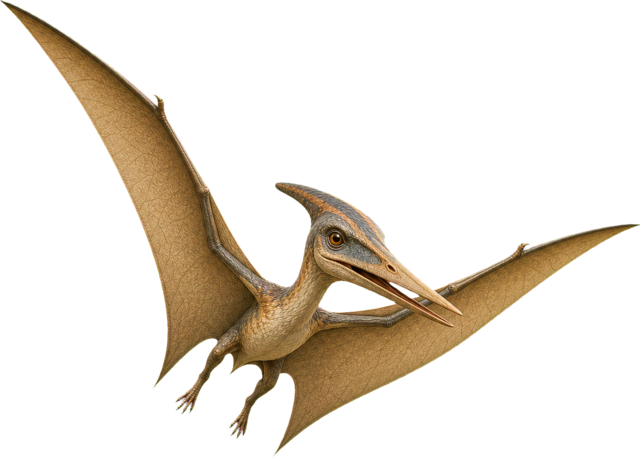
Pterodactylus was a small toothed pterosaur from the fine limestone of Solnhofen.
Read about this dinosaur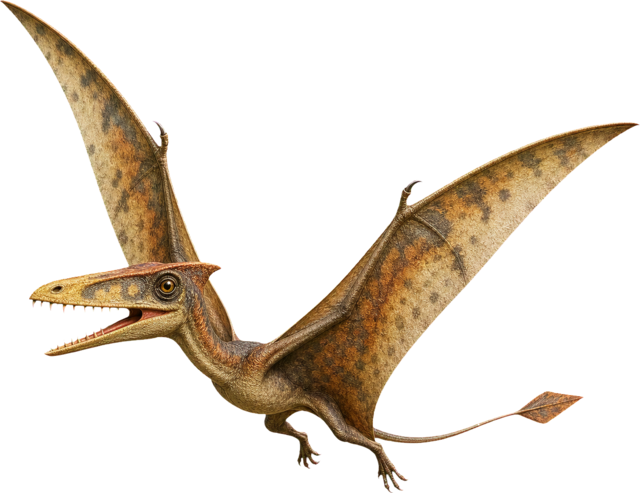
Jurassic
Dimorphodon
Dimorphodon was a pterosaur, not a dinosaur, with a large head and two different tooth shapes.
Read about this dinosaur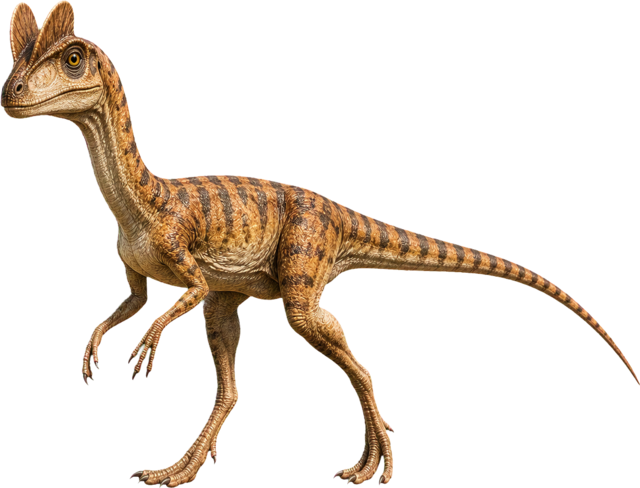
Jurassic
Dilophosaurus
Dilophosaurus was a large Early Jurassic predator with two thin bony crests on its head.
Read about this dinosaur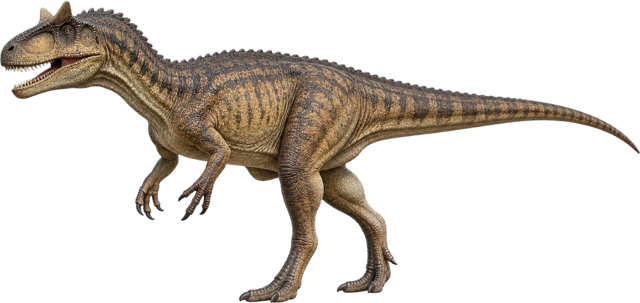
Jurassic
Allosaurus
Allosaurus was a big Jurassic predator with small brow horns, three-fingered hands, and teeth with saw-like edges.
Read about this dinosaurSources and review
How this page is checked
Names, periods, locations, diets, and size estimates are compared with museum and paleontology reference collections. Estimates are rounded and updated when the underlying content changes.
Last content review: June 22, 2026
Read our research method and sources